Prompt tracking
Agree on the questions that matter to your market, then track how selected AI platforms answer them over time.
Our answer engine optimization services combine AI search optimization with supporting SEO. The evidence-led AEO strategy builds on traditional SEO. This ongoing monthly service starts with a scoped audit and baseline. We agree priorities and ownership before onboarding, then implement and verify the work in the written scope.
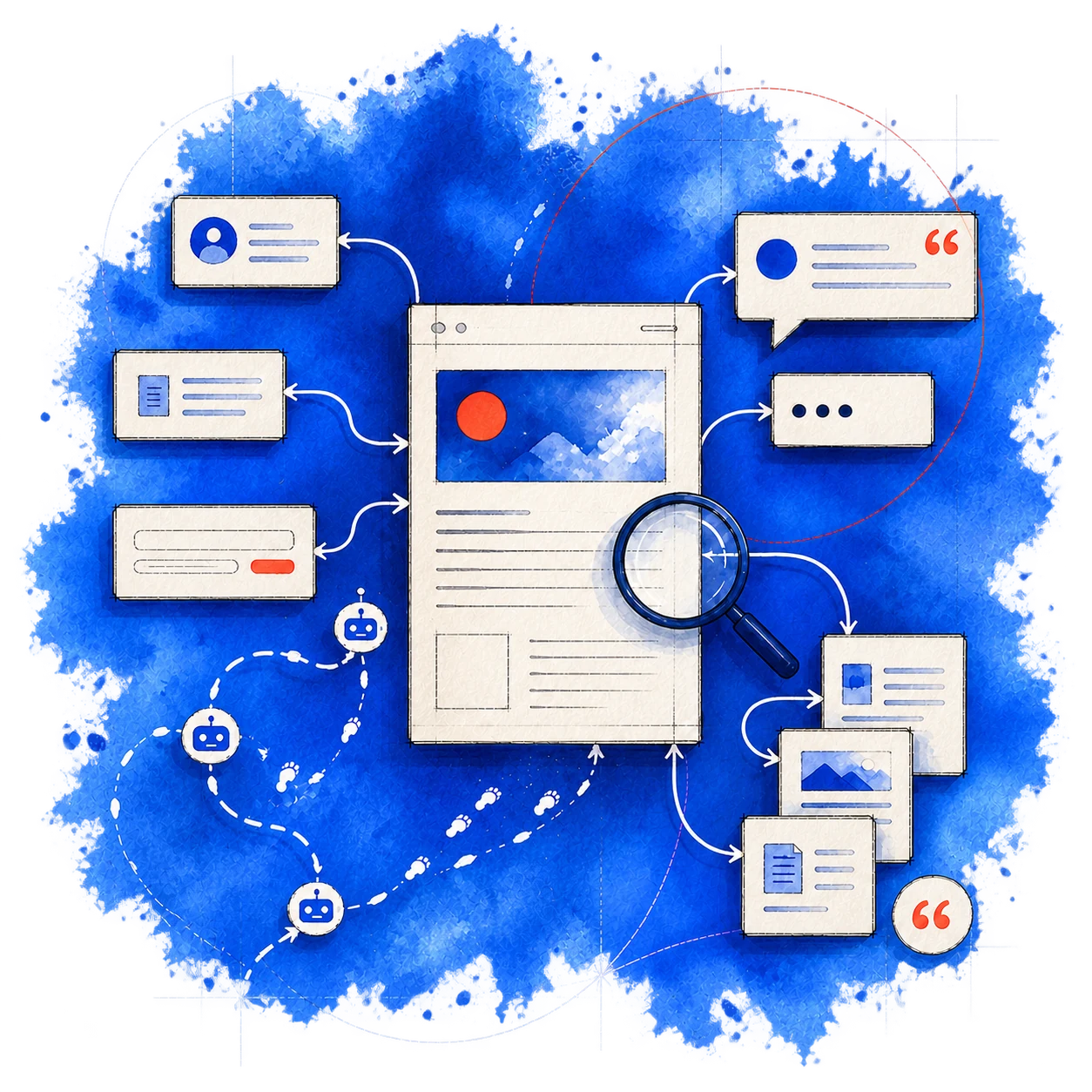
We review selected AI answers and sources, where your brand appears, whether agents can reach useful pages, and the search foundations supporting that visibility. This is sampled evidence from agreed prompts, platforms, markets, and dates—not a universal AI ranking. Read the measurement methodology.
Agree on the questions that matter to your market, then track how selected AI platforms answer them over time.
See whether your company, products, and key topics appear—and how the answer represents them.
Understand which AI crawlers request your pages and where access, structure, or content may be getting in the way.
Review the domains and pages used as sources, then identify realistic gaps in your own evidence and coverage.
The managed engagement has its own scoped audit and baseline. It is separate from the Free Website Audit.
Review the public website, agreed private data, selected AI answers and sources, and agent access where evidence is available.
Repeat the agreed checks, review what changed, and choose the next useful work instead of inflating the report.
Work with your team, or take responsibility for the agreed implementation when internal bandwidth is limited.
Show what was completed, inspect what went live, record what remains blocked, and update the evidence.
We decide the delivery model before onboarding so responsibilities are clear from the start.
There is no standard number of prompts, pages, articles, or implementation tasks. The useful scope depends on the baseline, market, access, priorities, and capacity of your team.
Track selected commercial, comparison, problem, and category questions relevant to your buyers.
Review where your company appears, where it does not, and how sampled answers describe it.
Examine the pages and domains used in sampled answers without treating citations as guaranteed outcomes.
Review public access and available crawler or agent activity from agreed logs and integrations.
Work on search, content, internal-link, technical, and evidence gaps supported by the baseline.
Support your team or complete the agreed work, then inspect the deployed result and re-check the evidence.
The written proposal confirms the work, owners, prompts, platforms, markets, reporting cadence, access, dependencies, approvals, fees, engagement terms, and completion evidence.
For Google AI Overviews and AI Mode, the same foundational SEO practices still apply. Google does not require a special AI text file, Markdown response, or special schema markup for these experiences. Read Google's current guidance.
AEO reviews how AI-powered search systems discover, describe, and reference your company in AI-generated answers. Useful content structure, accurate structured data, and evidence from a trusted source can help systems understand a page, but none guarantees a mention, citation, or ranking.
Yes. The managed engagement begins with its own agreed audit and baseline, separate from the Free Website Audit. It then continues month by month through measurement, priorities, implementation, verification, and re-checking.
We first understand your website, market, access needs, and likely delivery model. The written proposal confirms the scope, fees, engagement terms, responsibilities, and approval process before the monthly service begins.
It depends on the ownership agreed before onboarding. We can collaborate with your existing team through requirements, support, and verification, or own the agreed implementation when your team lacks capacity. Ownership can also differ by workstream.
There is no standard quantity or fixed bundle. The agreed monthly scope is based on the baseline, priorities, access, and team capacity. It can combine measurement, analysis, planning, content, technical work, implementation, and verification.
Pricing and engagement terms are confirmed in the written proposal after we understand the likely scope, access requirements, and implementation ownership. We do not publish one standard price because the work is customized.
SEO mainly improves how pages are discovered and understood in search engines. AEO also reviews how AI systems describe your company, which sources they use, and whether AI agents can reach useful content. Strong search foundations still matter to both.
The agreed scope can include widely used AI answer platforms such as ChatGPT, Gemini, Claude, Perplexity, and Copilot. Platform access, response behaviour, and available evidence change frequently, so the exact tracking plan is agreed before onboarding.
We can begin with public evidence. Agent traffic, private performance data, publishing, and deeper diagnosis may require access to server or edge logs, analytics, Search Console, your CMS, or other tools. We only use access that you deliberately provide for agreed work.
No. AI platforms choose their own answers and sources. We can measure selected evidence, improve access and content, and prioritize opportunities, but we do not guarantee mentions, citations, rankings, traffic, leads, or revenue.
Bring the questions you have about search and AI visibility. We’ll look at the evidence, clarify what matters, and find a sensible place to begin.
A practical conversation about evidence and next steps—never a promise of rankings or citations.
Calendar not loading? Book directly on Cal.com.